Showing posts with label aircraft. Show all posts

25 February 2014

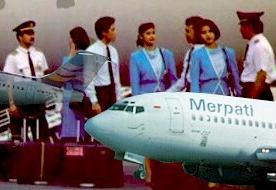
Employees of an Airline

There are number of Airlines operated in Indonesia, with different  names, structures of organization, operations, but there is a certain amount of similarity among each airline. An airline's most important assets are its airplanes and its people. An airline can have the most recent and best planes in the, but without the employees, an airline can't do anything.
Airlines are most often represented in public by those employees who have the most contact with their passengers, such as pilots and flight attendants, but there are many more airline employees working behind the scenes. Larger airlines may employ more people, but the employee categories are generally the same no matter what the size of the airline.Here are the various types of employees in an airline:
  • Line personnel - This is the group of people you most often see during a flight, and they form 85 percent of an airline's labor force. Line personnel include pilots and flight attendants, reservation clerks, airport check-in and gate personnel. Nowadays, some of duties of these line personnel, especially what so called ground handling (check-in, boarding gate, transfer desk, cleaning services, etc) are employed to subcontractors.
  • Operations - If line personnel form the heart of an airline, operations keeps it's blood pumping. These people are responsible for scheduling aircraft and flight crews to man the aircraft. Operations personnel maintain guidelines to meet the safety and regulation standards. Included in operations are the dispatchers, who track all of the airline's flights.
  • Maintenance - Airplanes are multi-million-dollar vehicles that must be maintained in order to prevent the airline from losing money. Aircraft only make money for the airline when they are transporting passengers. About 10 percent of an airline's work force is dedicated to aircraft maintenance.
  • Sales and marketing - If you wonder who sets your prices, you can usually find them in the sales and marketing divisions of an airline. These people are also tasked with advertising, cargo sales, reservations, customer service and food service.

deHavilland Twin-Otter DHC-6 Series 400 VIKING

Canada's most successful 19-seat commercial aircraft program with more than 800 aircraft built, the Twin Otter is popular for its rugged construction and useful STOL performance.
Perhaps the best testimony to the timelessness of the Twin Otter’s design is the fact that it remains today the largest-selling 19-passenger commuter airplane in the world.
The de Havilland Twin Otter is a highly maneuverable, versatile aircraft which can be flown safely at various speeds from 80 to 160 knots. The Twin Otter is a high winged, un-pressurized, twin engine turbine powered aircraft ideally suited to operate in all conditions and climates.
Around the world in jungles, deserts, mountains, the Arctic, and anywhere where rugged reliability and short-take-off-and-landing are required you will find the hard working Twin Otter. Adding to that versatility the Twin Otter can be fitted with wheels, skis or floats.
Well liked by operators for the easy maintenance offered by its fixed undercarriage, the Twin Otter’s two engine design also offers dependable passenger safety and confidence.

GENERAL INFORMATION:
Maximum Takeoff Weight: 12,500 lb (5670kg)
Maximum Landing Weight: 12,300 lb (5579 kg)
Number Of Crew: 1 or 2
Number Of Passengers: 20
Fuel Capacities: Total – 378 US Gallons
Fuel Capacities: Optional Long Range – 89 US Gallons

AIRFRAME:
Configuration All metal, non pressurized, high-wing monoplane and a construction with fixed tricycle (steerable nose) landing gear

DIMENSIONS:
Wing Span 65 ft (19.8 m)
Length 51 ft 9 in (15.77m)
Cabin Height 9 ft 8 in (2.95m)
Tail Height 19 ft 6 in (5.94 m)

CABIN DIMENSIONS:
Cabin Length 18 ft 5 in (5.61m)
Cabin Height 4 ft 11 in (1.50m)
Cabin Volume (usable) 384 cu ft (10.87 cu. m.)
Cabin Doors (left side) 50 in X 50 in (1.27m X 1.27m)
Cabin Door (right side) 30 in X 45.5 in (.76m X 1.16m)

ENGINES:
Two, Pratt & Whitney Canada PT6A-34 or optional PT6A-35, single stage, free-turbine engines.

PROPELLERS:
Two, Hartzell, HC-B3TN-3DY, three bladed reversible pitch, constant speed, fully feathering propellers. Optional 4-blade – type and configuration TBA

STANDARD AIRCRAFT BASIC WEIGHT:
6881 lb (3121 kg)
PERFORMANCE SUMMARY:
STOL Takeoff and Landing Distance: 1200 ft (366m)
(Takeoff distance to 50 ft)
Maximum Cruise Speeds:TAS Sea Level: 170 kt
5,000 ft: 181 kt
10,000 ft: 182 kt
Enroute Rate of Climb at Sea Level:
(both engines at maximum climb power): 1600 ft/min
Service Ceiling - both engines at maximum climb power
(Rate of climb 1000 ft/min): 26,700 ft (8138 m)
Payload Range – at maximum cruise speed
Payload for 100 nautical mile (185km) range: 4280 lb (1941 kg)
Payload for 400 nautical mile (741 km) range: 3250 lb (1474 kg)
Maximum Range - zero payload
with Standard Tankage (2583 lb (1172 kg) fuel): 775 nm (1435 km)
with Long Range Tankage (3190 lb (1447 kg) fuel): 980 nm (1815 km)
Maximum Endurance
with Standard Tankage (2583 lb (1172 kg) fuel): 7 hr 10 min
with Long Range Tankage (3190 lb (1447 kg) fuel): 9 hr

09 August 2010

Marketing Strategy in the Midst of Stiff Competition of Domestic Airlines


In 2010, domestic passengers predicted will grow about 15%, this is caused by the addition of aircraft fleet and capacity on major Airlines. Also because of the increasing demand of air transportation services, as it is considered more efficient and economical.

As economic growth in Indonesia began to increased, the traffic movement of people has also increased. There is a new paradigm that occurred in the domestic Airline business: the demand will increase in line with the addition of supply. We see the example with the entry in Garuda Indonesia fleet of B738 and B739 in Lion Air, the Seat Load Factors of two fleets is not less than 75% or number of passengers onboard is 150 passengers per flight in average.

In the midst of tough competition, where nearly all the Major Airlines upgrading its fleet into large and sophisticated Aircraft to fly over the main routes. The strategy to survive of this "Clash of the Titans", is finding a market niche, looking unspotted but potential routes.

This unspotted but potential routes is a major route connecting the city with the cities of the developing suburbs. Some of the routes fact does not require huge investment, because of the limited runway on some city, then that could be used is a narrow body jet aircraft.

Some of potential routes could be considered are : Banjarmasin - Bandung VV, Banjarmasin - Solo VV, Balikpapan - Semarang VV, Balikpapan - Solo VV, Balikpapan - Bandung VV, Makassar - Bandung VV, Makassar - Semarang VV, Sampit - Semarang VV. And many other unspotted but potential routes.

Other strategy is "jetizing" existing commuter routes, use proper Jet aircraft fly the routes that usually fly by propeller aircrafts. This facts also requires the Jet Aircraft able to Take-Off and Landing on runways less than 1800 meters.

To implement the above strategy to succeed, at least there are seven steps that must be followed:

1. Evaluate resources, goals, and objectives.

First things the Key Management may do is evaluating the business plan, determining a new paradigm, new goals, and new objectives, if necessary.

2. Identify market demand and market-segment opportunities.

Perform a complete market analysis of those "unspotted but potential routes", dig deeper, look for hidden opportunities.

3. Match resources to selected market niche.

Start browsing the proper aircraft fleet required to fly over those routes, create the aircraft rotation diagram match with the results of the demands.

4. Establish a marketing organization and strategy.

Setup a District and place a right person to be a District manager who able to implement the marketing strategies established by head office.

5. Select intervention and penetration level.

Selecting intervention and penetration level must carried by all divisions and all levels. It is important to gather all resources from all division to focus on the goals that already determined. Team work is not just about coordination, more than that, is about one paradigm for all divisions and all levels of management.

6. Develop a long-range marketing plan.

This step is about how we maintain and improve the achievement,

7. Implement, monitor feedback, and respond.

As soon as market established, anticipate the new (coming) competition in the route that we pioneered.